
Email Address
Phone Number
The NWA Land Squeeze:
Why Northwest Arkansas's Housing Boom Has a Lot Problem
Northwest Arkansas has been one of the fastest growing regions in the country for most of the last decade, and the numbers keep proving it out. According to the Northwest Arkansas Council, the region is now adding about 40 new residents a day, and population has climbed past 622,000 as of late 2025. Fortune 500 employers like Walmart, Tyson Foods, and J.B. Hunt keep pulling relocations into Bentonville, Rogers, Springdale, and Fayetteville. Bentonville alone grew from just over 54,000 residents in the 2020 Census to nearly 62,000 by 2024, a 14% increase in four years, per Census Bureau estimates. Centerton has ranked among Arkansas's fastest growing cities for several years running, and cities like Pea Ridge have nearly doubled in size since 2020.
That's the growth story every investor in this market has already heard. What gets far less attention is what's happening underneath it. The region isn't producing enough finished, buildable lots to keep pace with the people moving here.
A Widening Gap Between Demand and Buildable Ground
4,800
BUILDABLE LOTS
40
NEW RESIDENTS DAILY
$239M
SEWER INFRASTRUCTURE
The most recent Skyline Report, the semiannual benchmark for Northwest Arkansas real estate compiled by the University of Arkansas, counted roughly 22,000 total lots in active subdivisions across Benton, Washington, and Madison counties. Only about 4,800 of those lots are actually vacant and ready to build on. The rest are already occupied, under construction, or complete and sitting unsold.
CBER's own inventory math bears that out. Across every lot and home in the pipeline that isn't yet occupied, the region carries under two years of supply, 20.7 months, at the current absorption rate. That's a tight number for a region adding roughly 40 new residents every day. For a builder who isn't already sitting on a land position, there is functionally nowhere to buy ground and start building tomorrow.
It shows up directly in price. The average home price in Benton County reached $471,427 in the first half of 2025, up 8.9% year over year, while Washington County averaged $417,489, up 7.2%. New construction made up only about a third of homes sold in the back half of 2025, the lowest share in the last five reports, with resale inventory absorbing the rest. When population growth consistently outpaces the pipeline of new, buildable lots, rising prices aren't a temporary correction. They're the structural result, and nothing in the current entitlement and development pace suggests that's changing soon.
Water and sewer capacity is adding another layer to that constraint. Centerton's growth outpaced its wastewater capacity to the point that state regulators stopped approving new projects tied to its treatment plant, and Bentonville is now financing a $239 million overhaul of its own sewer system, expected to take a decade, just to keep up with demand. It's a reminder that raw land doesn't become a buildable lot on capital alone. It takes an operator who knows how to work through entitlement and infrastructure timelines, not just write a check.
Who Actually Controls the Lots
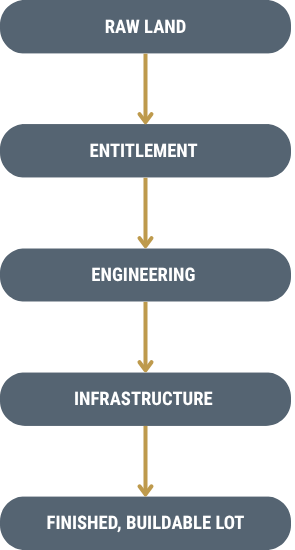
Here's the part of the story that matters most to how Primario Capital operates. The lots
that do reach the market aren't being created by the builders who need them. They're created by developers, separate businesses whose entire model is acquiring raw ground and taking it through entitlement, engineering, and infrastructure to deliver a finished, buildable lot.
Smaller and mid-size builders, the ones actually building the product diversity this market needs, from workforce housing to CrossMod® communities to attainable single-family homes, mostly can't access that pipeline at all. With only a couple thousand truly vacant lots in play across the region at any given time, and national builders positioned to buy in bulk, direct from developers, before anything is ever publicly listed, a smaller builder without an existing land position is effectively locked out. For them, the only real path to consistent lot supply is to buy finished lots from someone who develops them or become a developer themselves.
National builders solve the same problem differently, and they solve it with more resources. A public homebuilder's entire growth model depends on a steady, predictable feed of finished lots, and in a market, this supply constrained, they can't count on organic subdivision turnover to keep their construction and sales pipeline full. That's why they're constantly in the market to acquire land directly, buy out smaller developers, or lock up entire finished developments in bulk, whatever it takes to keep the machine fed. Whether that lot supply comes from their own in-house land division or from an outside developer, the lots still have to be sourced and entitled by somebody. That demand doesn't go away when the market tightens. It gets more aggressive. It isn't that demand for buildable lots is missing on either end of the market. It's that almost nobody outside the largest players controls enough of the supply to meet it, and that gap is exactly the market Primario Capital was built to serve.
Where Primario Capital Fits
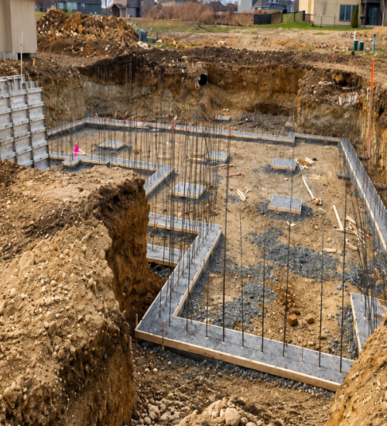
This is exactly the gap Primario Capital is built to close. Most capital sitting on the sidelines in this market is looking for a finished lot to purchase. Primario Capital works the stage before that. We source raw and underutilized land directly, take it through entitlement and development ourselves, and deliver finished lots.
That gives every project three ways to create value instead of one. We can sell finished lots directly to the smaller and mid-size builders who have no other reliable way to secure ground. We can sell finished lots or entire completed developments to national builders who need to keep their pipeline fed and don't have the time or local team to develop it themselves. Or we can hold the lots and build the homes ourselves through our affiliated construction operations, putting product directly into the market instead of selling the ground to someone else. Which path we take is decided project by project, based on which one produces the better outcome, not locked in from day one the way it would be for a fund that only buys, only sells wholesale, or only builds.
Built by 21 Years of Construction Experience
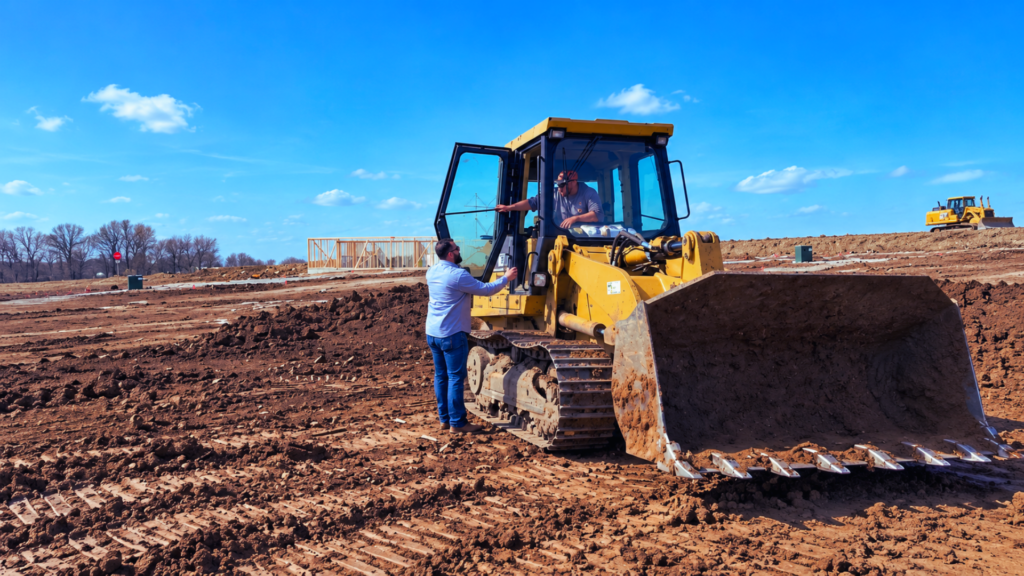
That flexibility is only as good as the team executing it. Land development isn't a financial modeling exercise. It's entitlement timelines, utility and infrastructure sequencing, realistic construction cost estimating, and knowing which sites actually pencil once grading, septic or sewer capacity, and municipal permitting requirements are accounted for.
That's the core difference between Primario Capital and a purely financial sponsor. We're not a group with capital and no boots on the ground. We're an operator first, which gives investors direct visibility into how a project is actually being built and how risk is being managed, not just a return projection on a pitch deck.
A Platform Built Around Its Own Projects
PRIMARIO CAPITAL FUND 1
Open to Accredited Investors
Learn more about current projects and the fund.